Sunday, 16 September 2012

Ontario Field Ornithologists (OFO) 30th Annual Convention

Merlin Flying over Lake Ontario in Presqu'ile Provincial Park, chasing Black-bellied Plovers.
A single Merlin was seen flying over Gull Island, alarming (and actually chasing) many of the shorebirds on shore, mostly the Black-bellied Plovers.

Large flock of American Pipits migrating along the shores of Lake Ontario in Presqu'ile Provincial Park.
Large flocks of American Pipits were observed migrating along the shores of Lake Ontario.

Black-capped Chickadee was just landing on this green feeder in a backyard of a cottage within Presqu'ile Provincial Park in Ontario.
Black-capped Chickadee was just landing on this green feeder in a backyard of a cottage within the park.

White-breasted Nuthatch very close perching on a branch in Presqu'ile Provincial Park.
This White-breasted Nuthatch was approaching me very closely in that same backyard as I was taking this photograph.

I was very lucky to have snapped this single shot of a female Ruby-throated Hummingbird right beside me as it was sipping nectar from a beautiful orange flower.

Pretty butterfly on a pretty purple flower
Butterfly experts - what species is this?

Baby Snapping Turtle seen in Brighton Constructive Wetland in Ontario.
The only survivor of many eggs predated by a raccoon, this baby Snapping Turtle just managed to survive - hopefully it will continue to live a long life, unlike many other turtles of this species.

6 Mute Swans (2 adults, 1 sub-adult, 3 immatures) in the Brighton Constructive Wetland.

Yellow-rumped Warbler flying in Presqu'ile Provincial Park.
A Yellow-rumped Warbler flying down to a lower branch.

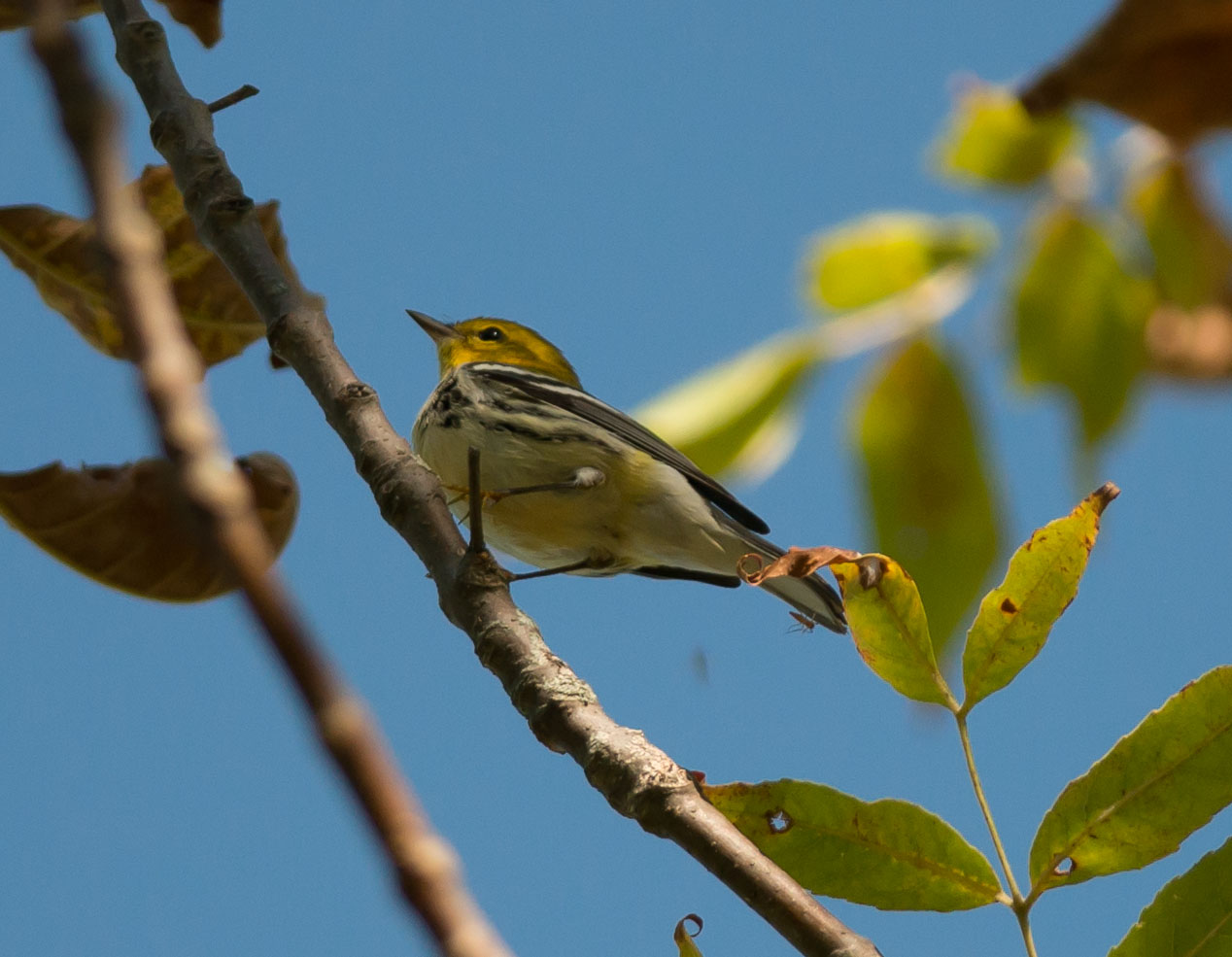
Black-throated Green Warblers were abundant in Presqu'ile Provincial Park in Ontario.
Black-throated Green Warblers were abundant today.

Because visitors to Presqu'ile PP feed these foxes, they become tame and are not afraid to approach humans. This one, with a coat variation, was right outside the parking lot by the lighthouse at the far end of the park.

Flying Peregrine Falcon seen above Beach 4 in Presqu'ile Provincial Park, near Gull Island.
Peregrine Falcon flying over the beach.

Sunday, 9 September 2012

Destructive Raccoons

There are some pests in the backyard that you just can't seem to get rid of. I have heard many stories about these animals in other birders' yards, but it is interesting to look at the damage these mammals can make.

A lot of people get angry when squirrels or chipmunks eat up all their expensive seeds that were actually meant for the birds. Well, I have a worse case: raccoons. They already destroyed two of my feeders, and they continue to eat up all the bird food in one night. I've got the squirrel proofing in my yard, but that doesn't stop these pests from returning every single night...

Nyjer feeder with an enormous chunk bitten out of it.
The raccoons cracked the plastic in this feeder and ripped of part of the metal frame.

The only solution is that I should start taking the feeders in the house with me during the night. There's no way of winning with these pests!

Birds of High Park, Toronto

As many Torontonians know, High Park is the place to be not only for birding, but also for a nice stroll in the park.Grenadier Pond provides a good water source for all birds, and a variety of birds breed and migrate through High Park's mixed habitats.

This morning I was there for a bird outing, but the trip turned more into a photography trip. I was met there by posing, unafraid birds of all kinds; here are some of the best shots.

Female House Sparrow seen in High Park, Toronto, Ontario
Female House Sparrow

Female American Goldfinch (non-breeding plumage) seen in High Park, Toronto, Ontario
Female American Goldfinch (non-breeding plumage)

Female Wood Duck seen in High Park, Toronto, Ontario
Female Wood Duck

Mallard (non-breeding plumage) seen in High Park, Toronto, Ontario
Mallard (non-breeding plumage)

Female American Goldfinch (non-breeding plumage) seen in High Park, Toronto, Ontario
Female American Goldfinch (non-breeding plumage)

Male American Goldfinch (non-breeding plumage) seen in High Park, Toronto, Ontario
Male American Goldfinch (non-breeding plumage)

Male American Goldfinch (non-breeding plumage) seen in High Park, Toronto, Ontario
Male American Goldfinch (non-breeding plumage)

Male American Goldfinch (non-breeding plumage) seen in High Park, Toronto, Ontario
Male American Goldfinch (non-breeding plumage)

Male American Goldfinch (non-breeding plumage) seen in High Park, Toronto, Ontario
Male American Goldfinch (non-breeding plumage)

Great Blue Heron seen in High Park, Toronto, Ontario
Great Blue Heron

Great Blue Heron Catching Fish in High Park, Toronto, Ontario
Great Blue Heron catching fish.

Monday, 3 September 2012

Red-necked Grebe Photos

Red-necked Grebe parents calling to each other in Colonel Smith Samuel Park, Toronto
Red-necked Grebe parents calling to each other.

Nestling Red-necked Grebe stretching in Colonel Smith Samuel Park, Toronto.
Nestling grebe stretching.

Adult grebe catching fish in Colonel Smith Samuel Park, Toronto.
Adult grebe catching fish.

Fluffy grebe begging for food in Colonel Smith Samuel Park, Toronto
Fluffy grebe begging for food.

More on the Red-necks

Red-necked Grebe Adult
Red-necked Grebe illustration by Caroline.
Today I checked up on the grebes again. They were far out in the harbour with their young, barely close enough to identify with the naked eye. I knew something was up because their nest is right by the shore (still with two eggs inside), and the Red-necked Grebes never stray far from there.

Looking around I spotted a family of minks, wading in the shallows, trying to swim to the eggs inside the nest! I immediately realized that these carnivorous animals are predators to the nestlings, still incapable of flight, and the rest of the eggs.

The remaining eggs in the nest, however, are long dead. The parents have stopped incubating them since a few days after the first chicks hatched. I believe that the task of raising the young they already have is difficult and time consuming, therefore they would not have the time to keep sitting on the nest, keeping a watchful eye out on nest robbers, and nurturing their babies.

Another predator (or rather simply a bother) I observed was the Ring-billed Gull. A few days ago, one actually tried to steal the fish one grebe had in its bill, the grebe meaning to feed it to a nestling! Noticing the gull flying above it, the Red-necked Grebe just dove underneath the surface of the water without panicking.

So you see, these birds have many predators to watch out for, and that their awareness really is the key to their survival.

Friday, 24 August 2012

Nesting Red-necked Grebes

Today I visited Colonel Smith Samuel Park in Toronto, Canada to check up on some Red-necked Grebes I have been observing this summer. There I saw the breeding pair I always watch in the harbour. This year they arrived late, but still managed to have two clutches. They laid four eggs late July, and the eggs just finished hatching. They may very soon migrate for the winter.

Breeding Red-necked Grebes in Colonel Smith Samuel Park, Toronto
Red-necked Grebe feeding nestling.

The parents were carrying their nestlings on their back (usual grebe behaviour) in between the wings to keep them warm. A few days ago, when only one chick hatched, that nestling would sit on the back of the incubating parent, while the other adult grebe would go find small fish to feed to the nestling. The roles of the parents often switched so that the one fishing for food could have the chance to rest.

I am very curious as to why they are having a clutch so late. They are actually supposed to leave for the Atlantic coast from around late August to October, and although this is not considered to be a long migration, what are the grebes going to do with their nestlings that can only fly from 50-70 days after hatching? Of course, some grebes in southern Ontario choose not to migrate, however winter here is a hardship.

I will keep posted on this family of grebes, to see whether they have chosen to stay, or try to squeeze in the flight before winter. Many other grebes in the harbour have already left.